
Energy efficiency has become a major priority for manufacturing facilities across Malaysia. Rising fuel costs, increasing operational demands, and stronger sustainability goals are pushing factories to optimize every aspect of their production systems. One area that significantly impacts energy consumption is industrial heating.
Industrial hot water boilers play an essential role in many manufacturing operations by providing reliable heating for processing, cleaning, sanitation, and temperature control. Modern systems are designed not only to deliver consistent performance but also to reduce fuel consumption and operational waste.

What Are Industrial Hot Water Boilers?
Industrial hot water boilers are heating systems designed to generate and circulate hot water for industrial applications. Unlike steam boilers, these systems operate using heated water that remains in liquid form while distributing thermal energy throughout a facility.
They are commonly used in industries such as:
- Food and beverage manufacturing
- Chemical processing
- Palm oil production
- Pharmaceuticals
- Textile manufacturing
- Commercial laundries
- Hospitality and large-scale facilities
Modern industrial hot water boilers are engineered for high thermal efficiency, stable temperature control, and reduced energy loss.
Why Energy Efficiency Matters in Manufacturing
Manufacturing facilities consume large amounts of energy daily. Heating systems often account for a significant portion of operational costs, especially in industries requiring continuous hot water circulation or thermal processing.
Poorly optimized heating systems can lead to:
- Excessive fuel consumption
- Higher electricity costs
- Heat loss during operation
- Increased equipment wear
- Production inefficiencies
- Unplanned downtime
By upgrading to energy-efficient industrial hot water boiler systems, manufacturers can improve productivity while lowering overall operating expenses.
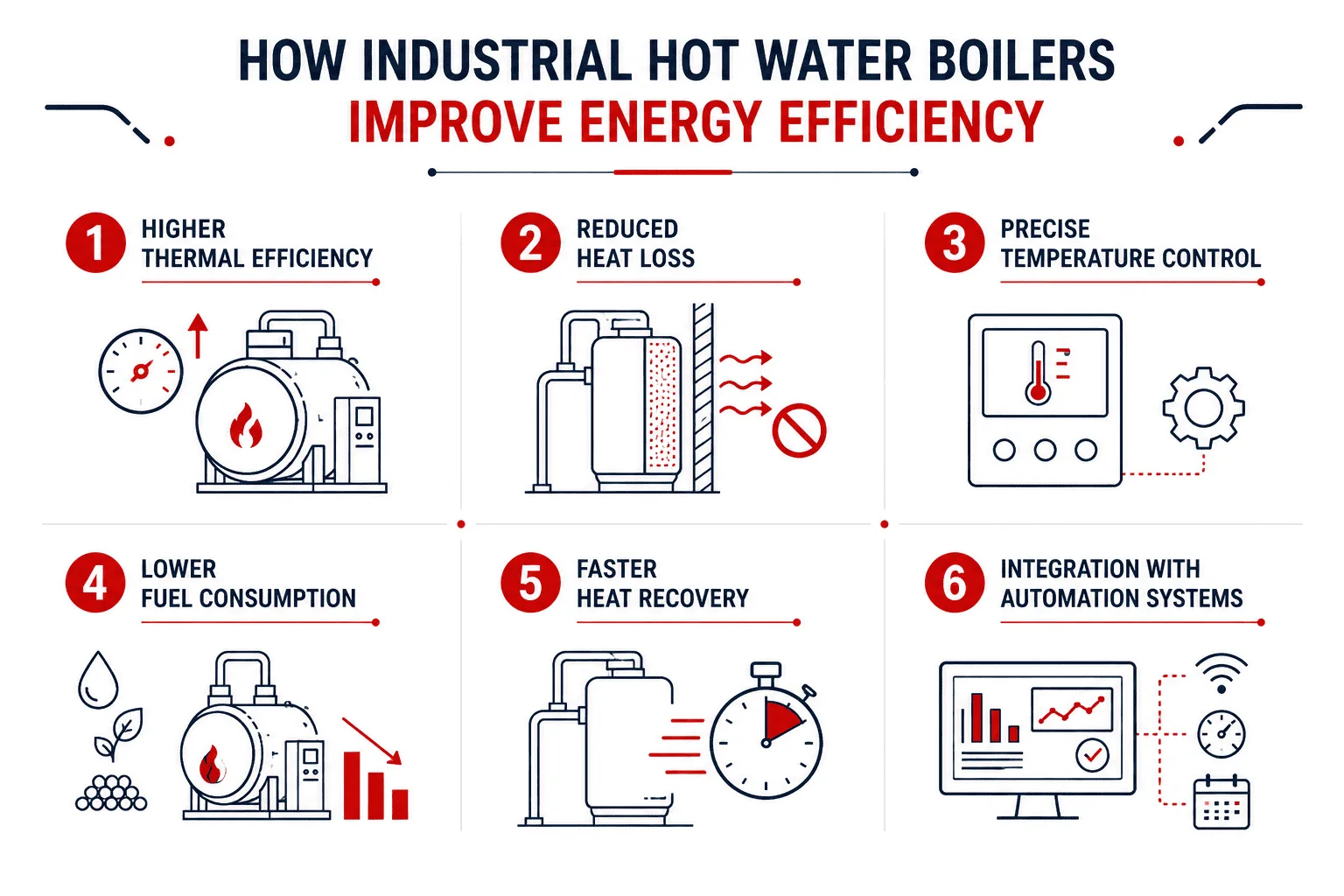
How Industrial Hot Water Boilers Improve Energy Efficiency
1. Higher Thermal Efficiency
Modern industrial hot water boilers are designed to maximize heat transfer while minimizing wasted energy. Advanced combustion systems and improved heat exchanger technology allow more heat to be utilized during operation.
This means facilities can achieve required heating levels using less fuel, helping reduce operational costs over time.
High-efficiency systems also maintain stable temperatures more effectively, which is critical for manufacturing consistency and product quality.
2. Reduced Heat Loss
Older boiler systems often lose large amounts of heat through poor insulation, outdated piping, or inefficient combustion chambers.
Modern industrial hot water boilers help reduce heat loss through:
- Improved insulation materials
- Optimized burner systems
- Better heat retention designs
- Efficient circulation systems
Reducing wasted heat directly contributes to lower fuel usage and improved overall efficiency.
3. Precise Temperature Control
Many manufacturing processes require accurate and consistent temperatures. Industrial hot water boilers with automated control systems can regulate heating output more precisely.
Benefits include:
- Reduced overheating
- Lower fuel waste
- Improved process stability
- Better product consistency
- Reduced manual adjustments
Smart temperature management prevents unnecessary energy consumption during production.
4. Lower Fuel Consumption
Energy-efficient boilers are designed to generate higher heating output with lower fuel input. Depending on the system design and facility requirements, businesses may use:
- Natural gas
- Diesel
- Biomass fuel
- LPG
Optimized combustion technology ensures fuel is burned more effectively, helping reduce waste and emissions.
This is particularly important for Malaysian manufacturers facing rising energy costs and increasing pressure to improve sustainability performance.
5. Faster Heat Recovery
Industrial facilities often require continuous heating during daily operations. Modern hot water boilers provide faster heat recovery rates, allowing systems to return to operating temperatures more quickly after periods of heavy usage.
Faster recovery helps:
- Improve production efficiency
- Reduce waiting time
- Lower overall energy demand
- Support continuous manufacturing operations
Efficient heat recovery is especially beneficial in large-scale production environments.
6. Integration With Automation Systems
Many newer boiler systems can integrate with industrial automation and monitoring platforms. Automated controls help operators monitor:
- Fuel consumption
- Water temperature
- Pressure levels
- System efficiency
- Maintenance schedules
Real-time monitoring helps facilities identify inefficiencies early and optimize energy usage more effectively.
Automation also reduces the risk of human error and improves operational safety.

Industries in Malaysia That Benefit From Energy-Efficient Hot Water Boilers
Several industries across Malaysia rely heavily on industrial hot water systems to maintain productivity and operational standards.
Food and Beverage Industry
Hot water boilers support:
- Cleaning and sanitation
- Food processing
- Sterilization
- Temperature-sensitive production
Energy-efficient systems help reduce operating costs while maintaining hygiene standards.
Palm Oil Processing
Palm oil facilities require large amounts of thermal energy for processing and cleaning operations. Efficient boiler systems help reduce fuel consumption while supporting continuous production cycles.
Pharmaceutical Manufacturing
Temperature consistency is critical in pharmaceutical production. Reliable hot water boilers help maintain stable process conditions while minimizing energy waste.
Textile and Laundry Operations
Industrial laundries and textile facilities require high volumes of heated water daily. Efficient boiler systems help reduce utility expenses while improving operational reliability.
Key Benefits of Industrial Hot Water Boilers for Manufacturing Facilities
| Feature | Energy Efficiency Benefit | Operational Impact |
|---|---|---|
| High Thermal Efficiency | Reduces fuel consumption by maximizing heat transfer | Lowers operating costs |
| Precise Temperature Control | Prevents overheating and energy waste | Improves product consistency |
| Faster Heat Recovery | Minimizes energy loss during production cycles | Supports continuous operations |
| Automated Control Systems | Optimizes boiler performance in real time | Reduces manual monitoring |
| Improved Insulation | Reduces heat loss during operation | Enhances overall efficiency |
| Lower Fuel Consumption | Uses fuel more effectively | Reduces long-term energy expenses |
| Preventive Maintenance Support | Maintains stable system efficiency | Reduces downtime and repair costs |
| Reliable Hot Water Supply | Ensures consistent heating performance | Improves manufacturing productivity |
The Importance of Preventive Maintenance
Even the most efficient industrial hot water boiler requires regular maintenance to maintain optimal performance.
Preventive maintenance helps:
- Improve system lifespan
- Maintain energy efficiency
- Reduce breakdown risks
- Prevent costly downtime
- Improve workplace safety
Routine inspections often include:
- Burner checks
- Pressure monitoring
- Heat exchanger cleaning
- Leak inspections
- Water treatment management
Working with experienced boiler specialists helps ensure systems continue operating efficiently over the long term.
Choosing the Right Industrial Hot Water Boiler
Selecting the correct boiler system depends on several operational factors, including:
- Facility size
- Heating demand
- Fuel availability
- Production capacity
- Operating hours
- Industry requirements
An experienced supplier can help businesses evaluate system requirements and recommend suitable heating solutions for long-term efficiency and performance.
Companies seeking industrial heating solutions can explore the boiler systems available through ATESB Products
to find systems tailored for industrial applications.
Reliable Industrial Boiler Solutions for Malaysian Industries
Selecting the right industrial boiler supplier is important for achieving long-term operational efficiency, reliability, and energy savings. With extensive industry experience, ATE provides industrial hot water boiler solutions designed to support various manufacturing and commercial applications across Malaysia.
Businesses working with ATE can benefit from:
- High-performance industrial boiler systems
- Reliable heating solutions for demanding operations
- Energy-efficient boiler technology
- Professional technical support and consultation
- Solutions tailored to specific industrial requirements
- Long-term operational reliability and maintenance support
From manufacturing facilities to commercial operations, ATE focuses on delivering efficient and dependable boiler systems that help businesses improve productivity while reducing operational costs.
Upgrade Your Industrial Heating System With Reliable Boiler Solutions
Improve energy efficiency, reduce operational costs, and support long-term manufacturing performance with high-quality industrial hot water boiler systems from ATE. Whether you are upgrading an existing facility or planning a new industrial setup, the right boiler solution can make a significant difference in productivity and energy savings.
Conclusion
Industrial hot water boilers play a major role in improving energy efficiency across Malaysian manufacturing facilities. Modern systems help reduce fuel consumption, minimize heat loss, improve temperature control, and support more sustainable industrial operations.
As industries continue focusing on operational efficiency and cost reduction, investing in high-performance boiler systems becomes increasingly important for long-term competitiveness.
Businesses that adopt energy-efficient heating technologies can benefit from improved productivity, lower operational expenses, and more reliable manufacturing performance.
Frequently Asked Questions (FAQs)
What is the difference between a hot water boiler and a steam boiler?
A hot water boiler heats and circulates water in liquid form, while a steam boiler generates steam for industrial processes. Hot water boilers are generally more energy-efficient for applications that require stable heating and lower operating pressure, whereas steam boilers are better suited for high-temperature industrial processes.
How much energy can an industrial hot water boiler save?
Energy savings depend on the boiler design, fuel type, operating conditions, and maintenance quality. Modern high-efficiency industrial hot water boilers can significantly reduce fuel consumption compared to older systems by improving heat transfer, reducing heat loss, and optimizing combustion performance.
How often should industrial hot water boilers be serviced?
Most industrial hot water boilers should undergo routine inspections and preventive maintenance regularly to ensure safe and efficient operation. Critical components such as burners, pumps, pressure controls, and heat exchangers should be checked periodically to prevent breakdowns and maintain energy efficiency.
Which industries commonly use industrial hot water boilers in Malaysia?
Industrial hot water boilers are widely used in industries such as food processing, palm oil production, pharmaceuticals, chemical manufacturing, textile processing, commercial laundries, and hospitality facilities where reliable heating and hot water supply are essential for daily operations.
What factors should businesses consider when choosing an industrial hot water boiler?
Businesses should consider several factors including heating capacity, fuel type, energy efficiency, operating pressure, installation space, automation features, maintenance requirements, and long-term operating costs. Choosing the right boiler system helps improve operational efficiency and reduce energy expenses over time.