
Selecting the right industrial heating system is critical for maintaining operational efficiency, product quality, and long-term production reliability. Many industries in Malaysia rely on thermal heating systems to support continuous manufacturing processes that require stable and consistent temperatures.
Choosing the correct thermal fluid heater for your facility involves more than simply selecting a heating unit. Factors such as heating capacity, fuel efficiency, operating temperature, safety requirements, and maintenance support all play important roles in long-term performance.
Businesses searching for a reliable thermal fluid heater in Selangor often prioritize systems that deliver energy efficiency, operational stability, and lower maintenance requirements for demanding industrial environments.

What Is a Thermal Fluid Heater?
A thermal fluid heater, also known as a thermal oil heater, is an industrial heating system designed to transfer heat using thermal oil instead of steam or water. These systems are commonly used in manufacturing processes that require precise high-temperature heating without operating under high pressure.
Unlike traditional steam boilers, thermal fluid heating systems can achieve high temperatures while operating at lower pressure levels, making them suitable for various industrial applications.
Modern Thermal Fluid Heaters by ATE are designed to provide efficient and reliable heat transfer for industrial facilities across Malaysia.
Why Choosing the Right Thermal Fluid Heater Matters
An improperly selected heating system can lead to:
- Increased fuel consumption
- Production inefficiencies
- Frequent maintenance issues
- Inconsistent heating performance
- Higher operational costs
- Unexpected downtime
The right system helps improve:
- Energy efficiency
- Process stability
- Workplace safety
- Equipment lifespan
- Long-term cost savings
Choosing a suitable thermal fluid heater in Selangor is especially important for facilities operating in high-demand industrial environments where continuous production is essential.
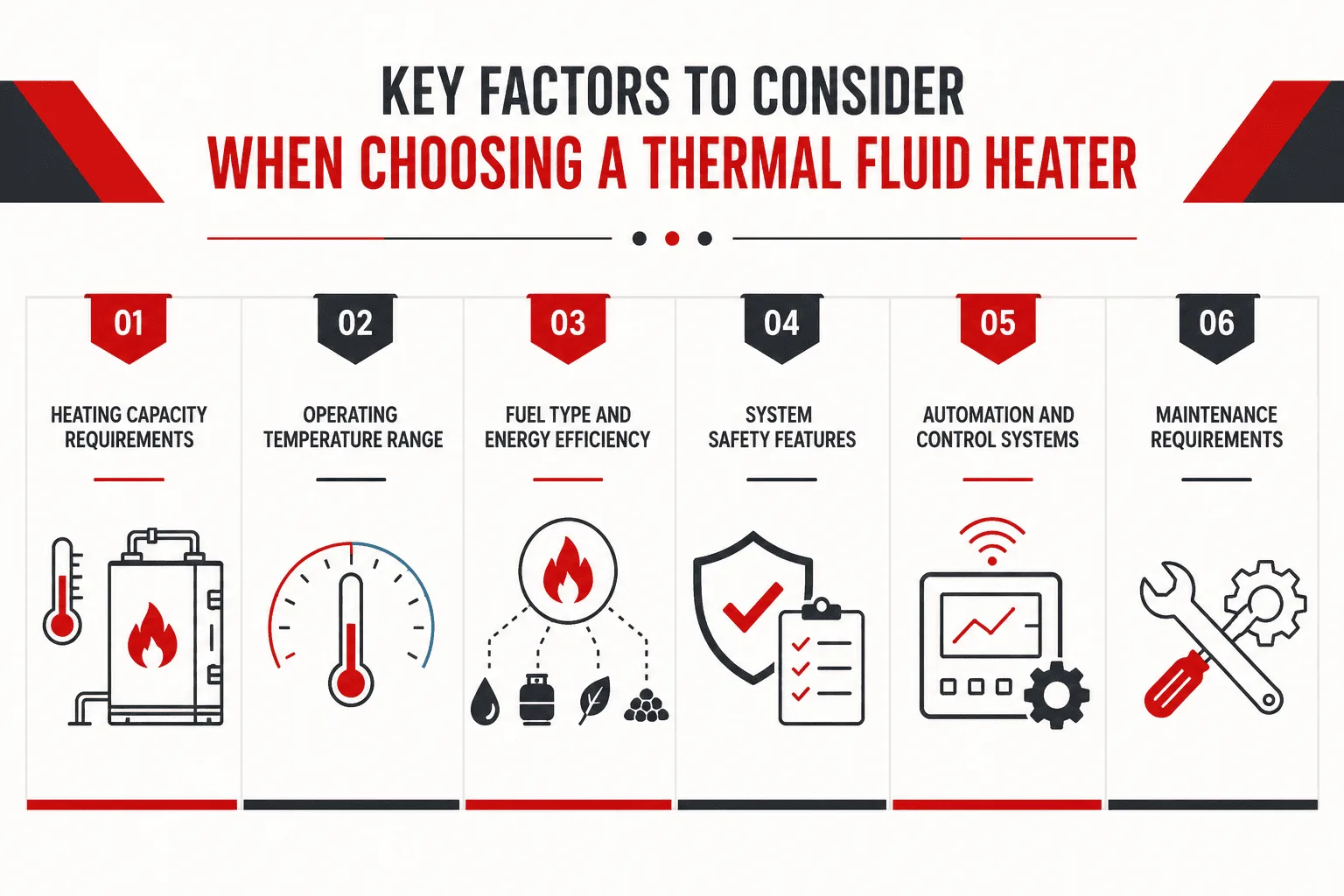
Key Factors to Consider When Choosing a Thermal Fluid Heater
Heating Capacity Requirements
One of the most important considerations is determining the correct heating capacity for your facility.
The heating system must be able to:
- Maintain required process temperatures
- Handle production demands
- Support continuous operation
- Prevent temperature fluctuations
An undersized system may struggle to meet operational requirements, while an oversized unit may waste energy and increase operating costs.
Experienced industrial heating specialists can help assess the appropriate heating load based on your production requirements.
Operating Temperature Range
Different industries require different heating temperatures. Thermal fluid heaters are commonly used in applications requiring medium to high process temperatures.
Facilities should consider:
- Maximum required operating temperature
- Temperature stability requirements
- Future production expansion plans
- Heat-sensitive manufacturing processes
Choosing the correct operating range helps improve efficiency while protecting system components from excessive wear.
Fuel Type and Energy Efficiency
Fuel selection directly impacts operating costs and long-term efficiency. Thermal fluid heaters may operate using:
- Natural gas
- Diesel
- LPG
- Biomass fuel
Energy-efficient systems help reduce fuel consumption by improving combustion performance and minimizing heat loss.
Manufacturers looking for a thermal fluid heater in Selangor often prioritize systems with advanced burner technology and optimized thermal efficiency to reduce energy expenses over time.
System Safety Features
Industrial heating systems must operate safely under demanding conditions. Reliable thermal fluid heaters should include:
- Temperature monitoring systems
- Pressure protection controls
- Emergency shutdown systems
- Flow monitoring
- Leak detection features
Safety-focused system designs help reduce operational risks and improve workplace reliability.
Automation and Control Systems
Modern thermal fluid heaters often include automated control systems that improve operational efficiency and simplify monitoring.
Automation features may include:
- Digital temperature controls
- Real-time performance monitoring
- Fuel consumption tracking
- Alarm systems
- Remote monitoring capabilities
Automated systems help facilities maintain stable heating performance while reducing manual adjustments and operational errors.
Maintenance Requirements
Maintenance plays a major role in system lifespan and performance. Facilities should consider how easily the system can be serviced and maintained over time.
Well-designed systems help simplify:
- Routine inspections
- Burner servicing
- Thermal oil monitoring
- Heat exchanger cleaning
- Component replacement
Preventive maintenance helps maintain efficiency while reducing the risk of costly downtime.

Industry Applications for Thermal Fluid Heaters
Thermal fluid heating systems are widely used across many industries in Malaysia.
Food Processing
Used for:
- Cooking systems
- Drying processes
- Heat treatment
- Food production lines
Stable heating is essential for maintaining product consistency and food safety standards.
Palm Oil Industry
Palm oil processing facilities require reliable thermal heating for:
- Oil extraction
- Processing systems
- Tank heating
- Production stability
Efficient thermal fluid heaters help reduce fuel costs while supporting continuous operation.
Chemical Manufacturing
Chemical production processes often require precise temperature control. Thermal fluid systems help maintain stable operating conditions for sensitive manufacturing applications.
Textile and Industrial Manufacturing
Thermal heating systems are commonly used for:
- Drying processes
- Material treatment
- Production heating
- Continuous industrial operations
Reliable temperature control helps improve production efficiency and product quality.
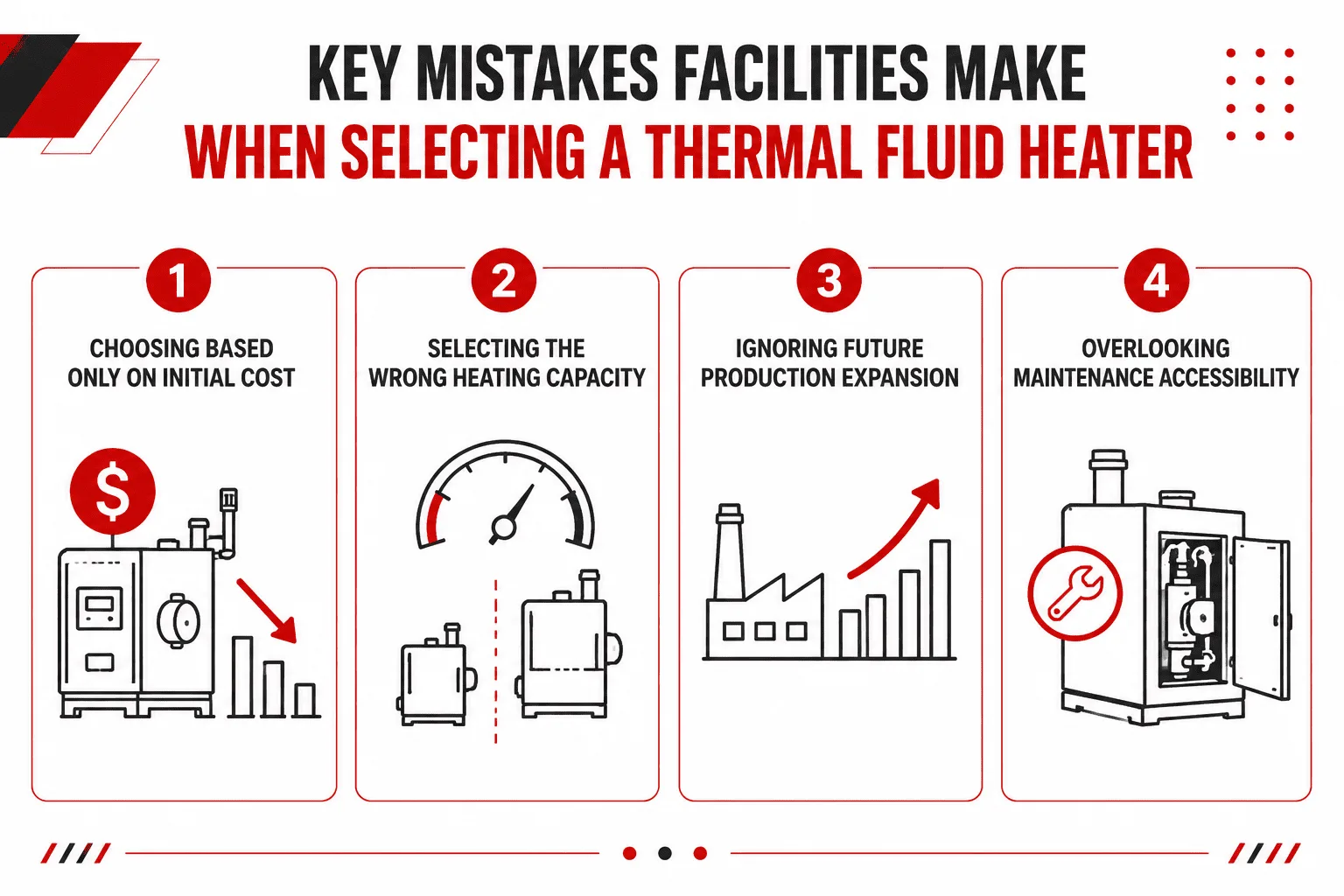
Key Mistakes Facilities Make When Selecting a Thermal Fluid Heater
Choosing an industrial heating system is a major long-term investment. However, many facilities focus only on upfront equipment costs without properly evaluating operational efficiency, maintenance needs, or future production requirements.
Understanding common selection mistakes can help businesses avoid unnecessary costs and operational issues later.
Choosing Based Only on Initial Cost
One of the most common mistakes is selecting a system based purely on the lowest purchase price. While lower-cost systems may reduce initial spending, they can lead to:
- Higher fuel consumption
- Increased maintenance frequency
- Reduced equipment lifespan
- Lower heating efficiency
- Greater downtime risks
Over time, operational and maintenance expenses may exceed the initial savings from purchasing a cheaper system.
Facilities should evaluate the total cost of ownership instead of focusing only on upfront investment.
Selecting the Wrong Heating Capacity
Incorrect system sizing can affect both efficiency and production stability.
An undersized thermal fluid heater may:
- Struggle to maintain target temperatures
- Cause inconsistent heating
- Reduce production efficiency
- Increase equipment stress
An oversized system may:
- Waste fuel unnecessarily
- Increase operating costs
- Create inefficient cycling
- Lower overall energy efficiency
Proper heating load calculations are essential when selecting the right system for industrial operations.
Ignoring Future Production Expansion
Some facilities select heating systems based only on current production needs without considering future growth.
As operations expand, heating demand often increases as well. A system with limited expansion capability may require costly upgrades or complete replacement earlier than expected.
Businesses investing in a thermal fluid heater in Selangor should consider:
- Future production growth
- Additional processing lines
- Expanded facility operations
- Higher heating demand
Planning ahead helps reduce future disruptions and additional capital costs.
Overlooking Maintenance Accessibility
Maintenance plays an important role in long-term heating performance, yet some facilities overlook how easily a system can be serviced.
Poorly designed systems may make maintenance more difficult and time-consuming. This can lead to:
- Longer downtime
- Higher servicing costs
- Delayed inspections
- Reduced equipment lifespan
Systems with accessible maintenance points help improve reliability and simplify routine servicing procedures.
The Importance of Working With an Experienced Supplier
Choosing the right supplier is just as important as selecting the right heating system. An experienced industrial heating provider can assist with:
- System sizing
- Technical consultation
- Installation support
- Maintenance planning
- Long-term operational support
Businesses looking for a dependable thermal fluid heater in Selangor often work with experienced suppliers that understand industrial heating requirements across multiple industries.
Companies can explore available industrial heating solutions through ATE products for systems designed to support demanding manufacturing environments.
Improve Industrial Heating Performance With the Right Thermal Fluid Heater
Enhance operational efficiency, maintain stable process heating, and reduce long-term energy costs with reliable thermal fluid heating solutions from ATE. Whether you are upgrading an existing system or planning a new industrial facility, choosing the right heating solution is essential for long-term performance.
Conclusion
Selecting the right thermal fluid heater is essential for achieving efficient, stable, and reliable industrial heating performance. Factors such as heating capacity, energy efficiency, safety features, automation capabilities, and maintenance requirements all contribute to long-term operational success.
For businesses seeking a reliable thermal fluid heater in Selangor, investing in a properly designed system can help reduce operational costs, improve production efficiency, and support long-term manufacturing growth.
With the right industrial heating solution, facilities can maintain consistent performance while improving overall energy efficiency and operational reliability.
Frequently Asked Questions (FAQs)
How is a thermal fluid heater different from a steam boiler?
A thermal fluid heater uses thermal oil to transfer heat, while a steam boiler generates steam under pressure. Thermal fluid heaters can achieve high operating temperatures at lower pressure levels, making them suitable for industries that require stable and efficient heat transfer.
What industries commonly use thermal fluid heaters in Malaysia?
Thermal fluid heaters are widely used in industries such as palm oil processing, food manufacturing, chemical production, textile processing, asphalt plants, and other industrial facilities that require continuous high-temperature heating.
How do I determine the right thermal fluid heater size for my facility?
The correct heater size depends on factors such as production capacity, required operating temperature, process heating demand, and daily operating hours. Proper system sizing helps improve energy efficiency and prevents operational issues caused by undersized or oversized equipment.
How often should a thermal fluid heater be serviced?
Thermal fluid heaters should undergo regular preventive maintenance to maintain efficiency and safe operation. Routine servicing may include burner inspections, thermal oil analysis, system cleaning, leak checks, and monitoring of temperature and pressure controls.
What factors affect the efficiency of a thermal fluid heater?
Several factors can impact efficiency, including burner performance, insulation quality, thermal oil condition, heat transfer efficiency, operating temperature stability, and maintenance quality. Proper system operation and regular servicing help maintain long-term energy efficiency.